Guides · Marco Island, Florida
What Has Changed in Marco Island: History & Today
Marco Island holds fifteen centuries of Calusa presence and one decade of dredge-and-fill development side by side. The census numbers show a community both almost entirely empty and deeply permanent.
From Calusa Shore to Mackle Decade: Marco Island's History
The Calusa lived here from about 500 CE, fishing and building shell mounds while Europe sorted out its post-Roman future. When Frank Hamilton Cushing arrived in 1896, he found not just a site but an artistic legacy—the Key Marco Cat, a small carved wooden figure scholars rank among the finest pre-Columbian artworks found in North America. That was the deep-time island, one that had stood for over a thousand years.
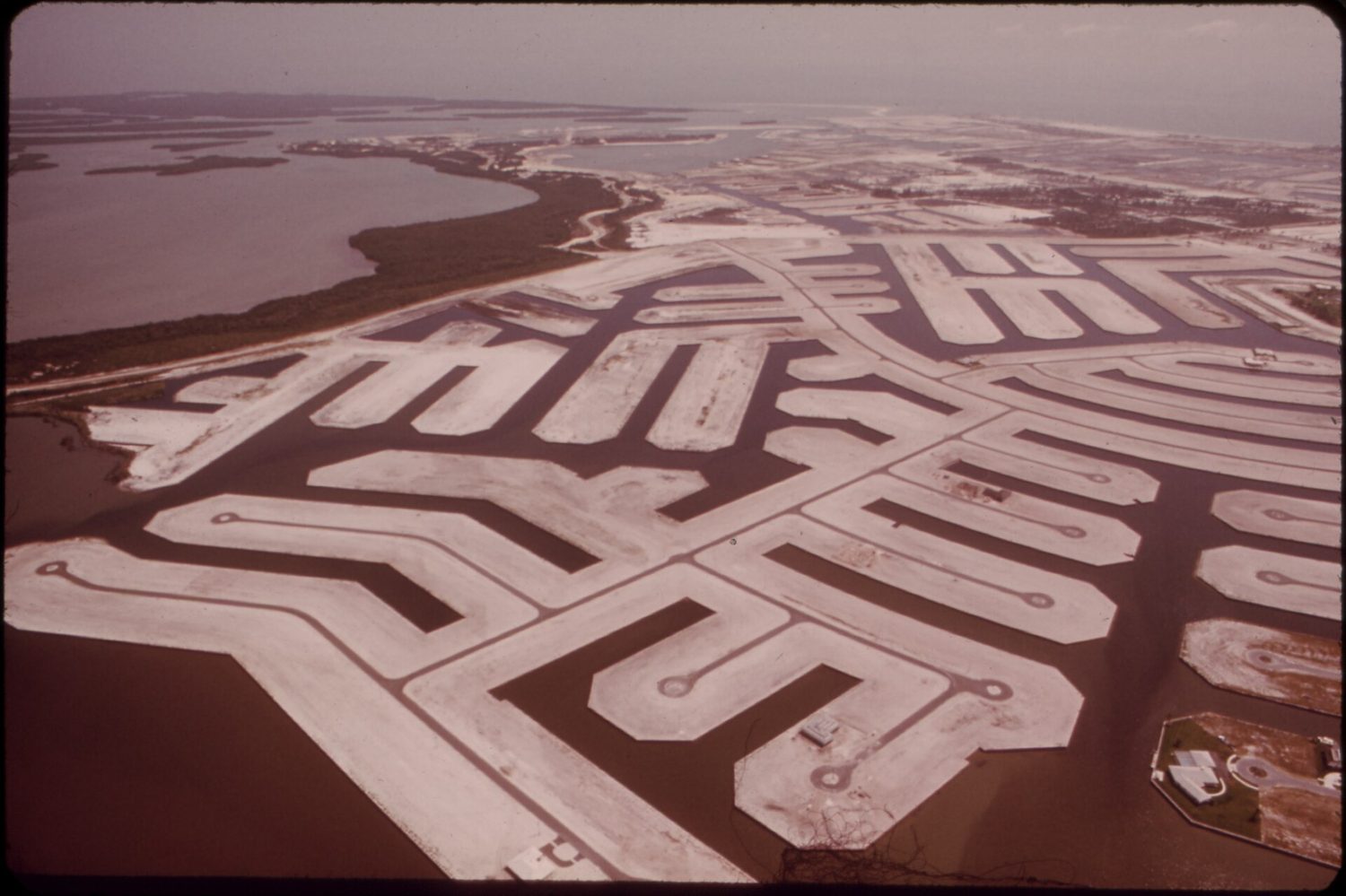
Then the Mackle brothers of the Deltona Corporation bought the land for $7 million and built a city on it through the 1960s. The island's name long predated their work—Key Marco belonged to archaeology before it belonged to real estate—but the physical place was remade. Marco Island reincorporated as a city on 28 August 1997, a formal acknowledgment of what the Mackles had already done: turning a Calusa island into a retirement and tourist destination in a single decade.
How the Mackles Built Marco Island in a Single Decade
The transformation was not gradual. The Mackles didn't layer development onto an existing town; they created the town from scratch, dredging canals and filling wetlands to make land where there had been mangrove and shell. The island's modern shape is as much a product of 1960s engineering as of Calusa shell-work. The two sit atop each other without quite merging.
The speed matters. A place that had been home to the Calusa for centuries became a planned community in roughly ten years. The physical remaking was total—streets, utilities, homes, a tourist economy—and it set the terms for everything that followed. The island's identity was never going to be a simple continuation of its past. It was going to be a collision.
Where to See the Key Marco Cat: Marco Island Historical Museum
The Key Marco Cat is the island's most important artifact, a small wooden carving recovered during Cushing's 1896 expedition. Not a curiosity—a masterwork, one of the finest examples of pre-Columbian art found in North America. The figure survives because the island's wet, peaty soil preserved the wood that would have rotted anywhere else.
Today the cat is displayed at the Marco Island Historical Museum, on loan from the Smithsonian. For a town built on rapid development, the museum holds the counterweight: evidence that something here predates the Mackles, the canals, and the condominiums by more than a millennium.
Marco Island's Seasonal Population: 10,003 Empty Homes
The census data tells a story the brochures don't. Marco Island has 18,436 total housing units, and 10,003 of them are vacant. Of those, 9,264 are held for seasonal or recreational use. The island's population is 15,998 people, with a median age of 67.7 years. The median home value is $866,200, and the median gross rent is $1,955. Median household income is $104,105, and 47.9 percent of residents hold a bachelor's degree or higher. Unemployment sits at 4.2 percent.
The picture is clear: more than half the homes sit empty for much of the year, occupied by people who come for the season and leave. The permanent population is older, well-educated, and relatively affluent—but outnumbered by its own housing stock. The island is simultaneously a full city and a largely vacant one, depending on the calendar.
| Measure | Value |
|---|---|
| Population | 15,998 people |
| Total housing units | 18,436 units |
| Vacant housing units | 10,003 units |
| Homes held for seasonal or recreational use | 9,264 units |
| Median age | 67.7 years |
| Median home value | $866,200 |
| Median gross rent | $1,955 |
| Median household income | $104,105 |
| Bachelor's degree or higher | 47.9 percent |
| Unemployment rate | 4.2 percent |
Beaches and Access: Tigertail and the Public Shore
Tigertail Beach is one of the island's two public beach accesses with parking and amenities. That matters because Marco Island is largely private—canals, gated communities, and resort properties dominate the shoreline. Public access is limited. Tigertail is a rare point where visitors and residents can reach the water without a key card or a boat.
The beach itself is a product of the same forces that shaped the island: dredge and fill, shifting sand, and a coastline managed as much as it is natural. It is public in a way that much of Marco Island is not. It serves as a reminder that the island's development was never complete—the shoreline keeps moving, and the county keeps maintaining the access points that exist.
What Has Changed, What Hasn't: The Island's Dual Identity
The island's meaning is held in the tension between its two histories. The Calusa past is not decoration; it is the foundation, literally and figuratively, of the place. The Key Marco Cat survived because the Calusa lived here for centuries, and Cushing found it because the island's wet soil preserved what other sites lost. The Mackle decade did not erase that—it built on top of it, sometimes in the most literal sense.
The census numbers reinforce the split. A median age of 67.7 and more than 10,000 vacant homes suggest a community that is profoundly seasonal, a place people buy into for retirement and leave for much of the year. Yet the same numbers show a permanent population of nearly 16,000, with high incomes and high education levels. The island is not a ghost town. It is a town full only part of the time.
The answer to how Marco Island went from Calusa settlement to developed city is that it happened in a single decade, on top of centuries of prior habitation, and the two layers have never fully merged. The Key Marco Cat is at the historical museum, where anyone can see it. The homes are vacant because they are seasonal. The public beach access is Tigertail, one of two. And the population is a fraction of the housing stock—a permanent community living inside a seasonal one, on land continuously occupied for over fifteen hundred years.
Common questions
- When was Marco Island built?
- The modern island was developed by the Mackle brothers of the Deltona Corporation in the 1960s, after they bought the land for $7 million. They turned a Calusa island into a retirement and tourist destination in about a decade.
- Who were the Calusa and when did they live here?
- The Calusa lived here from about 500 CE. They were the original inhabitants, and the Key Marco archaeological site made the island famous. The Key Marco Cat, a carved wooden figure from 1896, is on display at the local museum.
- Where can I see the Key Marco Cat?
- The Key Marco Cat is displayed at the Marco Island Historical Museum, on loan from the Smithsonian. It's one of the finest pre-Columbian artworks found in North America, recovered during Frank Hamilton Cushing's 1896 expedition.
- What beaches are public on Marco Island?
- Tigertail Beach is one of the island's two public beach accesses with parking and amenities. It's a good spot for visitors looking for a public beach experience.
- How many people live on Marco Island?
- The population is about 15,998 people, with a median age of 67.7 years. Many homes are for seasonal or recreational use—9,264 of 18,436 total housing units—so the year-round population is smaller than it seems.
- Is Marco Island expensive to live in?
- Yes, the median home value is $866,200 and median gross rent is $1,955. Median household income is $104,105, and about 47.9% of residents have a bachelor's degree or higher. Unemployment is low at 4.2%.
Every business named above is one we hold a listing for, and every date traces to a source on our sources page. We do not describe menus, interiors or service we have not verified. Details change — confirm before you travel.