Guides · Marco Island, Florida
How Marco Island Got Its Name
The name on the map is a loan from the deep past, even if the ground beneath it was built to order in a single decade.
The Name Before the Island
Marco Island is young as a landmass and old as a name. The Calusa lived here from about 500 CE, fishing the mangroves and building shell mounds that would hold their history for over a thousand years. When Frank Hamilton Cushing led his 1896 expedition to the site, he called it Key Marco, and that name stuck to the archaeology even as the island itself was about to be remade.
The Key Marco Cat came out of that dig—a small carved wooden figure, recovered from the muck, now regarded as one of the finest pre-Columbian artworks found in North America. It gave the place a permanent claim on the national imagination. The name Marco, then, was never about the developers. It was already freighted with meaning when the dredges arrived.
The Decade of Dredge and Fill
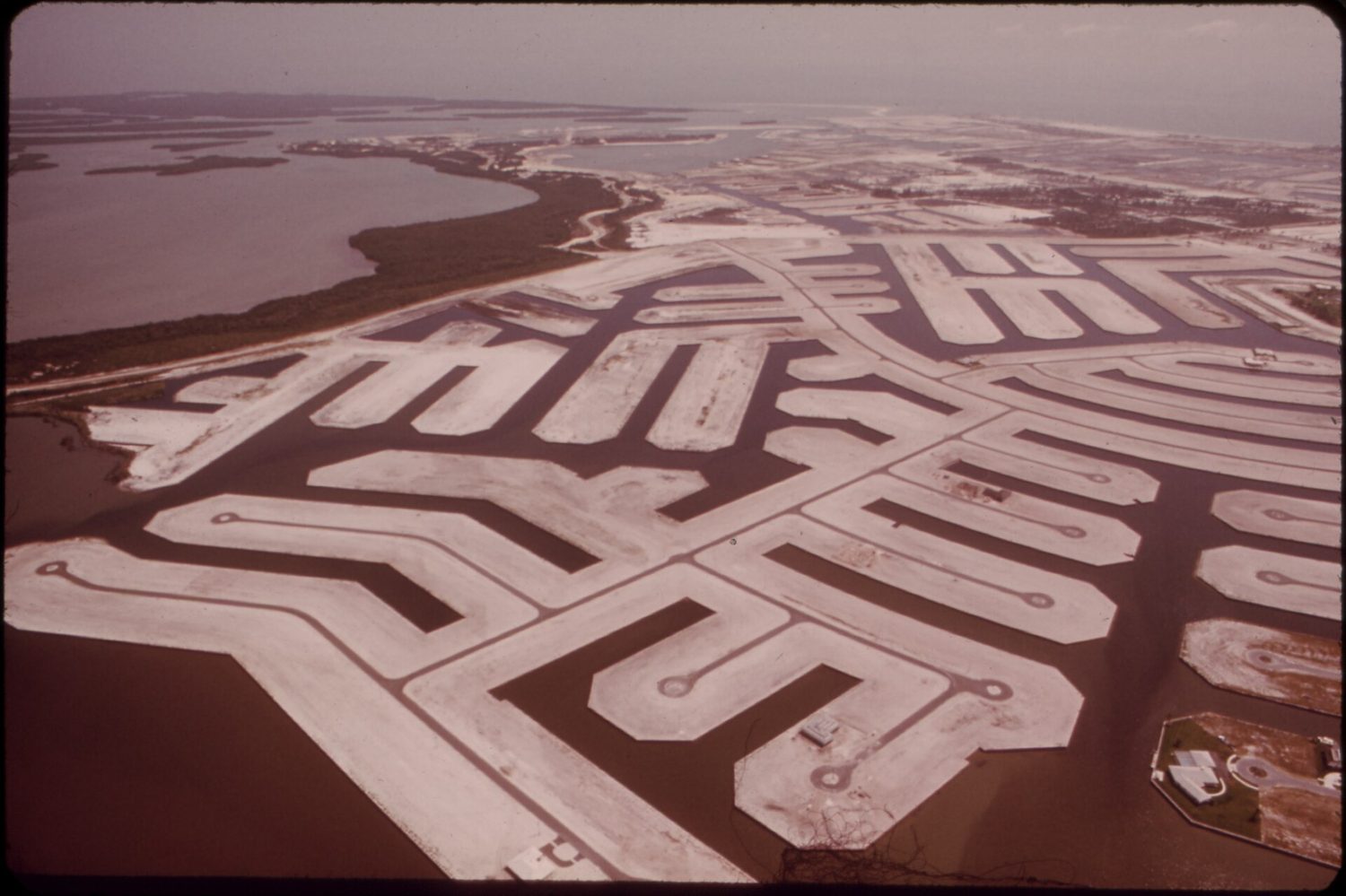
The modern island is a construction project. The Mackle brothers of the Deltona Corporation bought the land for $7 million and spent the 1960s turning a Calusa island into a retirement and tourist destination. They did it fast. In a single decade, the shell mounds and tidal flats became canals, lots, and waterfront addresses.
The scale of that transformation is visible in the census data. The island now holds 18,436 housing units. Of those, 9,264 are held for seasonal or recreational use—more than half. The population sits at 15,998 people, but the median age is 67.7 years. This is a place built for a particular kind of life, and the Mackles knew exactly who they were selling to.
The City That Came Later
For decades, Marco Island was unincorporated territory, governed from the county seat. That changed on 28 August 1997, when the island reincorporated as a city. The name they chose was not Key Marco, not Deltona, not anything new. They kept the old name, the one that already belonged to the archaeology.
The median home value is $866,200. Median gross rent runs $1,955. The median household income is $104,105, and the unemployment rate is 4.2 percent. Nearly 48 percent of residents hold a bachelor's degree or higher. These are numbers that describe a wealthy, educated, mostly retired population—the demographic the Mackles were building for half a century ago.
The Shape of the Name Today
Walk the island now and the name does double duty. It points back to the Calusa, whose presence is preserved in the collections at the Marco Island Historical Museum, where the Key Marco Cat is displayed on loan from the Smithsonian. It also points to the engineered landscape—the canals, the beach accesses, the planned communities.
Tigertail Beach remains one of the island's two public beach accesses with parking and amenities, a rare piece of shared ground in a town of private waterfront. The vacant housing units number 10,003, a striking figure for a place with only 15,998 people. The seasonal units and the empty ones tell the same story: this is an island built for winter, for visitors, for a rhythm that the Calusa never knew.
The name survived all of it. It was there before the Mackles, before the dredges, before the city charter. Marco Island is a name that predates the island it now labels—a reminder that the ground may be new, but the place is old.
Every business named above is one we hold a listing for, and every date traces to a source on our sources page. We do not describe menus, interiors or service we have not verified. Details change — confirm before you travel.