Guides · Marco Island, Florida
Marco Island by the Numbers: What the Census Says
The census counts 15,998 people on Marco Island, but the number that matters more is 10,003: the vacant housing units, which is nearly the entire winter population.
The Numbers That Define the Island
Marco Island is a city of 15,998 people, and a city of 18,436 housing units. The gap between those figures is the whole story. Of those units, 9,264 are held for seasonal or recreational use. Another 10,003 are vacant at any given moment. The island is not empty—it is waiting.
The median age is 67.7 years. That is not a typo, and it is not a rounding error. This is one of the oldest towns in Florida, and the numbers reflect a place built for a specific kind of life. The median household income is $104,105. The median home value is $866,200. The median gross rent is $1,955. The unemployment rate is 4.2 percent. Nearly half of residents—47.9 percent—hold a bachelor’s degree or higher.
These are not accidental statistics. They are the residue of a deliberate construction.
A Decade of Dredge and Fill
The Calusa lived here from about 500 CE. They built shell mounds, carved wood, and worked the mangrove coast for more than a thousand years. Their island had no streets, no grid, no median home value. It had water, fish, and a society that lasted longer than most modern nations.
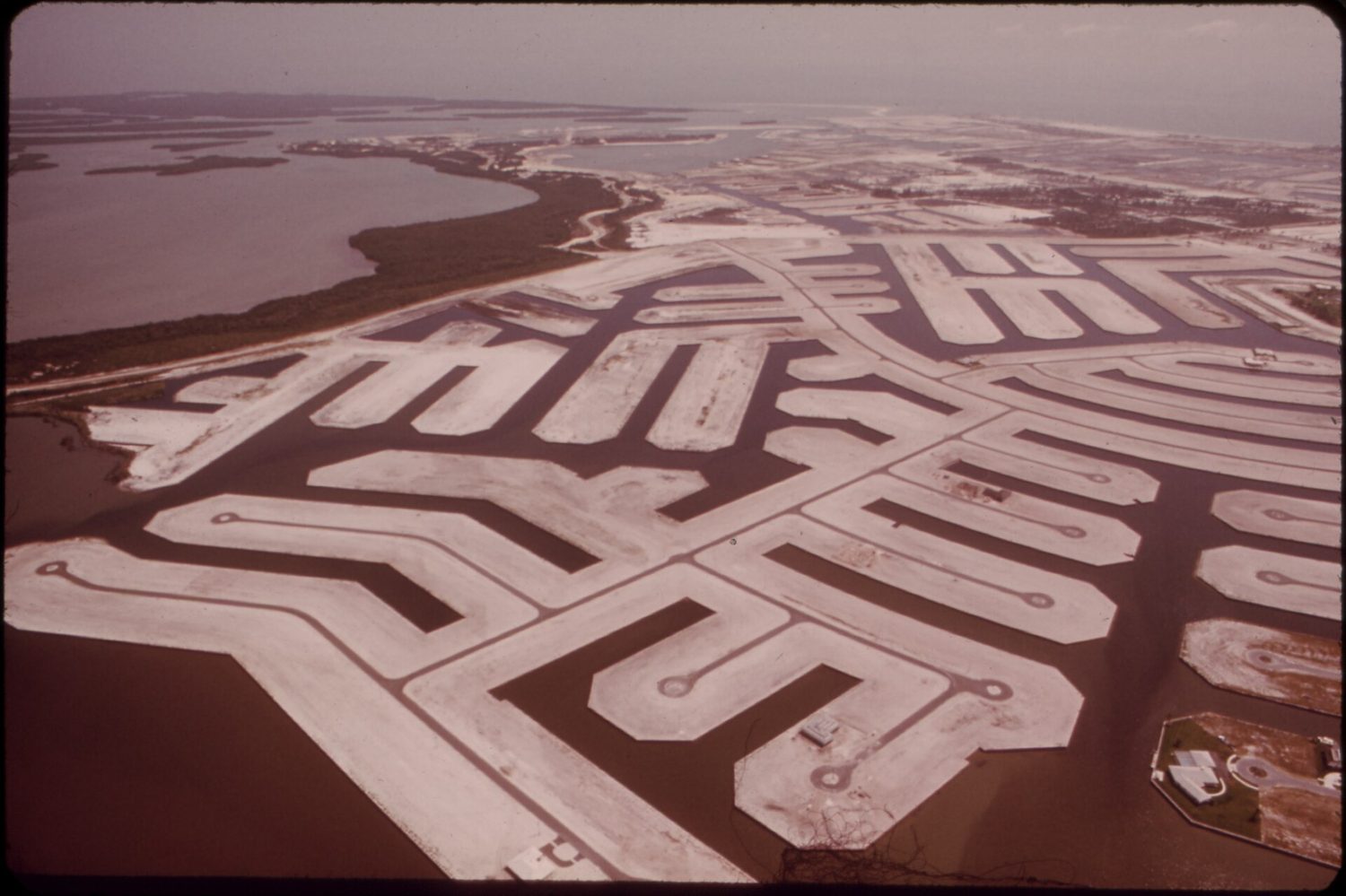
Then the Mackle brothers of the Deltona Corporation bought the land for $7 million. Through the 1960s, they dredged the bay bottom, pumped sand into place, and turned a Calusa island into a retirement and tourist destination in a single decade. The island’s name long predates its development—the Key Marco name attaches to the archaeological site that made it famous—but the physical place you walk on today is largely a product of that one furious building spree.
The Mackles did not just build houses. They built the conditions for the census numbers above. A place with a median age of 67.7 and a vacancy rate of 54 percent is not a town that grew organically. It is a product, engineered for a specific buyer: affluent, older, and absent for much of the year.
The Cat That Survived the Bulldozers
Before the dredges arrived, Frank Hamilton Cushing’s 1896 expedition recovered a small carved wooden figure at Key Marco. The Key Marco Cat is one of the finest pre-Columbian artworks found in North America. It is a few inches tall, carved from wood, and it survived centuries of swamp conditions that should have destroyed it. It is now displayed on loan from the Smithsonian.
The cat is a reminder that this island had a deep past before it had a grid of streets. The Calusa did not leave behind census data. They left behind shell mounds, canals, and a wooden cat that outlasted their civilization. The Mackle brothers left behind 18,436 housing units.
Marco Island reincorporated as a city on 28 August 1997. That is a recent date, and it matters. The island spent decades as an unincorporated development, a product of the Deltona Corporation, before it became a self-governing city. The census numbers you see today are the result of that history: a place that was built fast, incorporated late, and now sits mostly empty for most of the year.
What the Vacancy Rate Actually Means
A 54 percent vacancy rate is not a sign of decline. It is a sign of seasonality. The 9,264 seasonal units are not abandoned. They are waiting for their owners to arrive, usually in November, usually from the Northeast, usually for four to six months.
The permanent population of 15,998 is the year-round core. They are the ones who vote, pay the taxes, and deal with the traffic when the seasonal residents return. The 47.9 percent with bachelor’s degrees are part of that core. The 4.2 percent unemployment rate is part of that core. The $104,105 median household income is part of that core.
The $866,200 median home value is not. That number is set by the whole market, including the seasonal buyers who treat the island as a second address. The $1,955 median gross rent is the price of entry for the workers who staff the restaurants, the golf courses, and the construction crews. They live on the island, but they do not own it.
The Other Public Beach
There are two public beach accesses with parking and amenities on Marco Island. One is the famous one, the one that shows up in brochures. The other is Tigertail Beach, which is the one locals actually use. It sits on the lagoon side, requires a walk across a sandbar to reach the Gulf, and has parking, restrooms, and a concession stand. It is not the postcard beach. It is the working beach.
The same logic applies to the census data. The headline numbers—the median income, the median age, the home values—are the postcard. The vacancy rate is the lagoon. It requires a walk to understand, and it tells you more about how the island actually functions.
Marco Island is not a paradox. It is a machine. The Calusa built a society that lasted a millennium. The Mackle brothers built a retirement destination in a decade. The census counts what the Mackles built: 18,436 units, 9,264 of them seasonal, 10,003 of them empty on any given day.
The 15,998 people who live here year-round are the permanent crew. The 67.7 median age is the product specification. The $866,200 median home value is the price tag. The Key Marco Cat is the only thing on the island that was not built to be sold.
Every business named above is one we hold a listing for, and every date traces to a source on our sources page. We do not describe menus, interiors or service we have not verified. Details change — confirm before you travel.