Guides · Marco Island, Florida
Marco Island History: From Calusa Mounds to Mackle Dredges
Marco Island is what happens when a single decade of dredge-and-fill is laid directly over fifteen hundred years of Calusa habitation. The census numbers still show the scar.
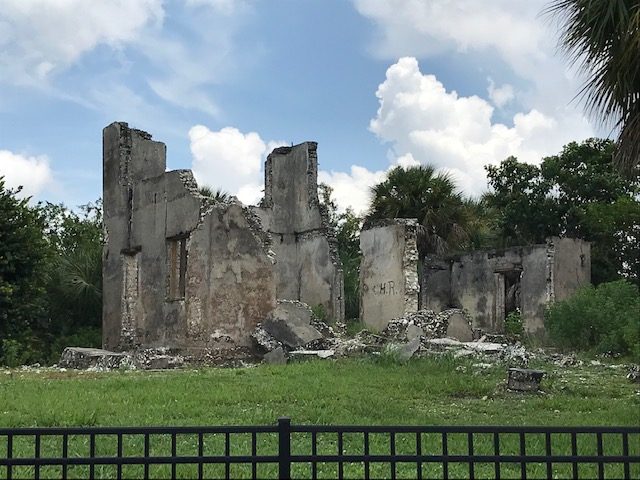
How Marco Island Went from Calusa Mounds to Mackle Dredges
The Calusa lived on this ground from about 500 CE. They built shell mounds, canals, and a fisher-kingdom that dominated southwest Florida for a millennium and a half. Then, in the 1960s, the Mackle brothers of the Deltona Corporation bought the land for $7 million and turned it into a retirement and tourist destination in a single decade. That is the whole story of Marco Island in one sentence: a deep-time native capital, scraped flat and resold as lots. The island's name long predates its development—the Key Marco name attaches to the archaeological site that made it famous, not to the dredge that remade it.
The Key Marco Cat: A Pre-Columbian Masterpiece Found Here
Before the Mackles, before the condos, there was the Cat. Frank Hamilton Cushing's 1896 expedition recovered a small carved wooden figure—the Key Marco Cat—from the muck of the island's ancient canals. It is one of the finest pre-Columbian artworks found in North America, a delicate, expressive carving that survived centuries in anaerobic peat. Today it is displayed at the Marco Island Historical Museum, on loan from the Smithsonian. The museum is the single best place on the island to understand what was here before the dredges arrived.
The Mackle Brothers' Dredge-and-Fill Decade That Built Marco Island
The Mackle brothers did not build on empty land. They bought a Calusa island, then set about making it saleable. Mangroves were cleared, shell middens were pushed aside, and canals were cut through what had been tidal marsh. The dredge-and-fill process created waterfront lots where there had been wetland, and the sales machine did the rest. Retirees and tourists came in waves. The island grew so fast that it spent decades as an unincorporated development before Marco Island reincorporated as a city on 28 August 1997. The city is young; the ground beneath it is not.
Marco Island Demographics: A Seasonal, Wealthy, Retired Population
The census tells you exactly what kind of place this became. Population is 15,998, and the median age is 67.7 years. This is not a working town; it is a destination. Nearly half of residents—47.9 percent—hold a bachelor's degree or higher, and median household income sits at $104,105. But the housing numbers are the real story. Of 18,436 total housing units, 10,003 are vacant. Of those, 9,264 are held for seasonal or recreational use. The median home value is $866,200; median gross rent is $1,955. This is an enclave built for part-time residency, and the vacancy rate proves it.
Tigertail Beach: Marco Island's Dredged Public Beach
Tigertail Beach is one of the island's two public beach accesses with parking and amenities. It is also a product of the same processes that built the island—the beach itself was shaped by dredge-and-fill operations, its lagoon and sandbar the result of moved material rather than natural accumulation. Visitors should know that public access is limited; there are only two spots with parking, and Tigertail is the one most people end up at. The beach is fine. It is also manufactured.
Marco Island vs. Inland Florida: A Tale of Two Floridas
Drive 23 miles east to Everglades City and you hit a different Florida entirely—a working town that hosts the Everglades Seafood Festival, not a seasonal enclave. Arcadia, 90 miles away, is rodeo country. Okeechobee (109 miles) has a speckled perch festival; Stuart (133 miles) has a boat show; Sebastian (153 miles) has a clambake; Dade City (170 miles) has a kumquat festival. Those towns have events because they have permanent populations. Marco Island has a 4.2 percent unemployment rate and a median age near 68 because it was built as a place to retire, not to work. The contrast is not subtle. The interior of Florida still runs on festivals and full-time residents; Marco Island runs on seasonal property value and a dredged coastline.
Marco Island by the Numbers: Seasonal, Wealthy, Educated
| Measure | Value |
|---|---|
| Population | 15,998 |
| Median age | 67.7 years |
| Bachelor's degree or higher | 47.9% |
| Median household income | $104,105 |
| Total housing units | 18,436 |
| Vacant housing units | 10,003 |
| Seasonal/recreational homes | 9,264 |
| Median home value | $866,200 |
| Median gross rent | $1,955 |
| Unemployment rate | 4.2% |
The industry that built Marco Island was not fishing or farming. It was land development—the conversion of a Calusa homeland into a retirement product, executed in a single decade and sold lot by lot. The Key Marco Cat is the island's oldest claim to fame, and the museum that houses it is the best reminder of what the Mackles bought. The vacant units, the seasonal homes, the median age—all of it is the measurable legacy of that purchase. The Calusa are gone. The dredges are gone. The numbers remain.
Common questions
- When was Marco Island built?
- The modern island was developed by the Mackle brothers of the Deltona Corporation through the 1960s, after they bought the land for $7 million. The island reincorporated as a city on August 28, 1997. Before that, the Calusa lived here from about 500 CE.
- What is the Key Marco Cat and where can I see it?
- The Key Marco Cat is a small carved wooden figure from the Calusa era, recovered in Frank Hamilton Cushing's 1896 expedition. It's considered one of the finest pre-Columbian artworks in North America. It's displayed at the Marco Island Historical Museum on loan from the Smithsonian.
- How many people live on Marco Island?
- The population is 15,998 people, with a median age of 67.7 years. Of the 18,436 total housing units, 10,003 are vacant and 9,264 are held for seasonal or recreational use. The median home value is $866,200.
- What beaches are public on Marco Island?
- Tigertail Beach is one of the island's two public beach accesses with parking and amenities. The other public access exists but isn't named in our coverage. Tigertail is the main spot for visitors looking for facilities.
- Is Marco Island a good place to retire?
- Yes, the median age is 67.7 years, and the median household income is $104,105. Unemployment is low at 4.2 percent, and 47.9 percent of residents hold a bachelor's degree or higher. The Mackle brothers developed it as a retirement destination in the 1960s.
- What's the history before the Mackle brothers?
- The Calusa lived here from about 500 CE. The island's name long predates development, and the Key Marco archaeological site made it famous. Frank Hamilton Cushing's 1896 expedition recovered the Key Marco Cat, now at the Marco Island Historical Museum.
Every business named above is one we hold a listing for, and every date traces to a source on our sources page. We do not describe menus, interiors or service we have not verified. Details change — confirm before you travel.