Guides · Marco Island, Florida
Marco Island Weather: Season-by-Season Guide
Marco Island’s weather is the original architect. It set the Calusa’s rhythm for fifteen centuries, then sold the Mackle brothers on a dredge-and-fill gamble that now houses a population with a median age of 67.7.
Marco Island Weather History: How the Calusa Lived by It
Long before the Mackles, the Calusa read the sky the way a banker reads a ledger. From about 500 CE, they built their society around the wet-dry cycle: dry winters for gathering and ceremony, wet summers for fishing the shallows and managing the shell mounds that still define the island’s contours. The Key Marco site—the name attached to the archaeological dig that made the island famous—sits on ground chosen precisely because it sat high enough to survive the summer storms. Weather was not an inconvenience to the Calusa; it was the schedule. The same southwest winds that pushed afternoon thunderstorms across the Gulf also pushed fish into their nets. They did not fight the season. They built with it.
How Marco Island's Weather Shaped Its Development
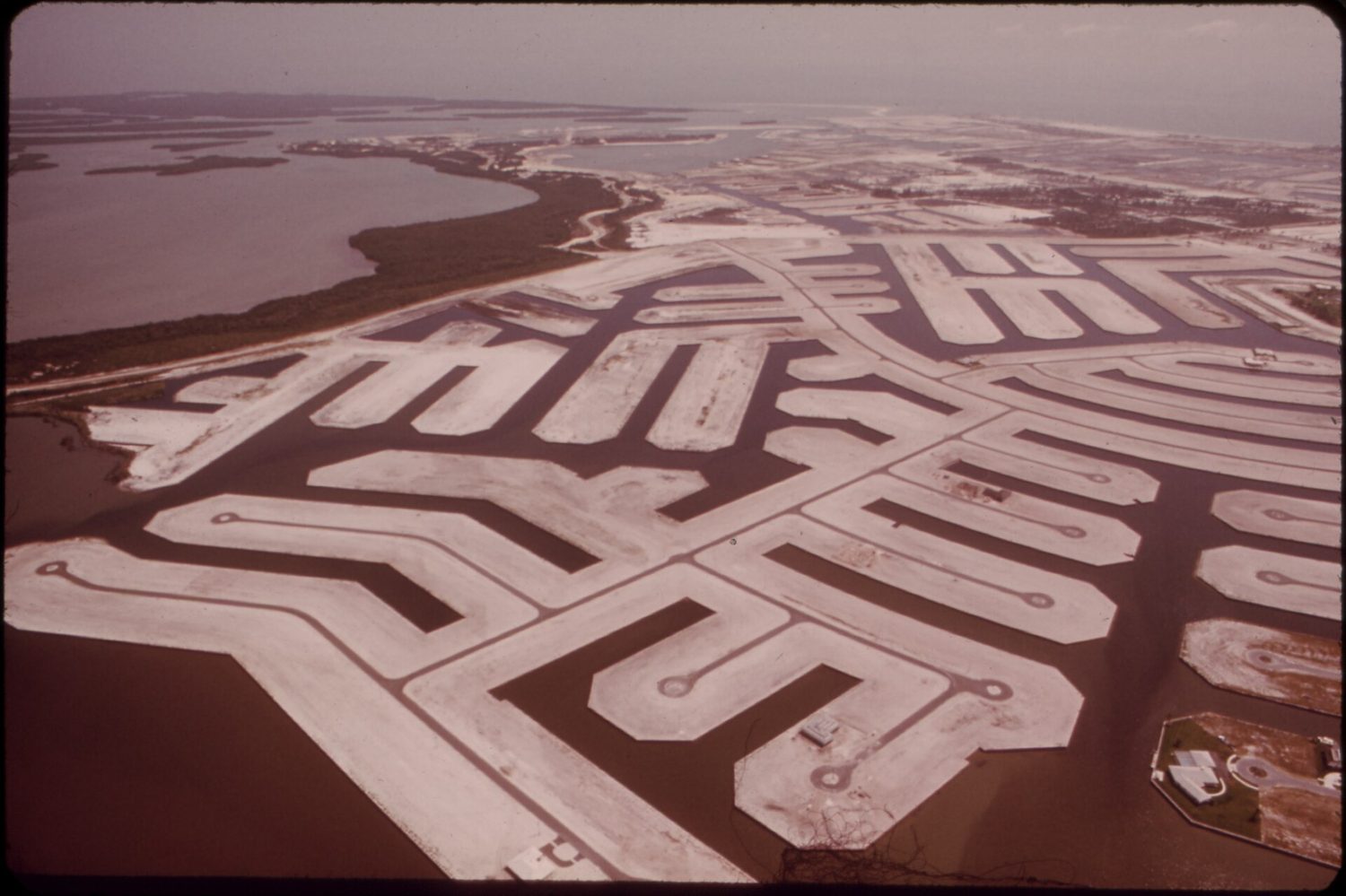
When the Mackle brothers of the Deltona Corporation bought the land for $7 million and started building in the 1960s, they were not selling dirt. They were selling a calendar. The dredge-and-fill operation that turned a Calusa island into a retirement and tourist destination in a single decade depended on one assumption: that people would pay for winter sunshine and forgive summer humidity. The construction crews worked through the wet season, pouring concrete between thunderstorms, racing the clock before the next downpour. By the time Marco Island reincorporated as a city on 28 August 1997, the weather had already shaped the demographic: today, 9,264 of the island’s 18,436 housing units are held for seasonal or recreational use. The Mackles bet on the dry half of the year. The census data shows they won.
Winter in Marco Island: Mild Weather and Snowbirds
Winter is the payoff. Mild, dry, and reliably sunny, it fills those seasonal units and justifies the 47.9 percent of residents with bachelor’s degrees and the $104,105 median household income. The population of 15,998 swells as the snowbirds arrive, and the island’s median age—67.7 years—reflects a place built for retirement, not for raising kids. Winter is also when the Marco Island Historical Museum does its heaviest lifting, drawing visitors to see the Key Marco Cat, the small carved wooden figure recovered in Frank Hamilton Cushing’s 1896 expedition. Displayed on loan from the Smithsonian, it is one of the finest pre-Columbian artworks found in North America. It spends the season in a climate-controlled case while the humans who come to see it enjoy the 70-degree afternoons outside.
Summer in Marco Island: Heat, Humidity, and Storms
Summer is the trade-off. The heat builds by late morning, and by 3 p.m. the sky goes dark and the rain comes down in sheets that turn streets into rivers for an hour. This is not a flaw in the design; it is the design. The Calusa knew it, the Mackles knew it, and anyone who spends a summer afternoon at Tigertail Beach learns it fast. The beach is one of the island’s two public accesses with parking and amenities, and in summer the smart play is to arrive early and leave before the clouds stack up. The storms are brief but serious. They also keep the 10,003 vacant housing units empty—no one is paying $1,955 median gross rent to sit through August humidity when the air conditioning bill is half the rent.
Hurricane Season in Marco Island: What to Know
The risk was always there. The Calusa survived the centuries by knowing when to move inland, but they had no concrete to lose. The Mackles’ development, built in a single decade on dredged fill, put $866,200 median home values directly in the path of the Atlantic’s summer output. Hurricane season runs June through November, and the island’s low elevation means storm surge is not a hypothetical—it is a design constraint that the 1997 reincorporation has had to govern ever since. The reincorporation gave the city the power to manage its own building codes and emergency response, but it cannot change the geography. The same weather that made the island attractive in winter is the weather that threatens it in late summer.
Best Time to Visit Marco Island: Spring and Fall
Spring and fall are the sweet spots. The humidity drops, the crowds thin, and the afternoon storms become less insistent. For visitors, this is the window when the weather does what the brochures promise without the winter premium or the summer sweat. For the island itself, the shoulder seasons are a transition—snowbirds packing up in April, the first seasonal residents trickling back in October. The pattern extends beyond Marco Island. Everglades City, 23 miles away, holds its Seafood Festival in the mild winter months, and Arcadia’s All-Florida Championship Rodeo, 90 miles out, runs in the same dry season. The weather that shapes Marco Island shapes the whole region, and the shoulder seasons are when it all feels most manageable.
Marco Island Weather at a Glance: Season by Season
| Season | Typical Weather Pattern | What It Means for Visitors |
|---|---|---|
| Winter (Dec–Feb) | Mild, dry, sunny; highs in the 70s | Peak season; book early, expect crowds |
| Spring (Mar–May) | Warming, drier, fewer storms | Best balance of good weather and lighter traffic |
| Summer (Jun–Aug) | Hot, humid; daily afternoon thunderstorms | Early-morning beach trips; plan around the rain |
| Fall (Sep–Nov) | Cooling, wet early; hurricane risk peaks | Shoulder season; watch the hurricane forecasts |
The answer to when to visit is simple: spring or fall, when the weather is cooperative and the island’s 67.7-year-old median age means the seasonal rhythm still rules the calendar. The Calusa knew the schedule. The Mackles sold it. The rest of us just book a flight.
Common questions
- What was Marco Island before it was developed?
- The Calusa people lived here from about 500 CE. The modern island was created by the Mackle brothers of the Deltona Corporation, who bought the land for $7 million and built it out through the 1960s. The island's name and the Key Marco archaeological site long predate that development.
- Where can I see the Key Marco Cat?
- The Key Marco Cat is on display at the Marco Island Historical Museum, on loan from the Smithsonian. It's a small carved wooden figure from Frank Hamilton Cushing's 1896 expedition, considered one of the finest pre-Columbian artworks found in North America.
- Which beaches have public access with parking?
- Tigertail Beach is one of the island's two public beach accesses with parking and amenities. It's the main one visitors use for a full beach day.
- Is Marco Island mostly year-round residents or seasonal?
- The census shows 9,264 of 18,436 housing units are held for seasonal or recreational use, and 10,003 units are vacant. With a median age of 67.7 and a population of 15,998, it's heavily seasonal and retirement-oriented.
- How expensive is it to live or stay on Marco Island?
- The median home value is $866,200, and the median gross rent is $1,955. Median household income is $104,105. It's an affluent area, with 47.9 percent of residents holding a bachelor's degree or higher.
- What's the unemployment rate and job situation?
- The unemployment rate is 4.2 percent. It's a small city of about 16,000 people, so jobs are limited mostly to tourism, retail, and services tied to the seasonal population.
Every business named above is one we hold a listing for, and every date traces to a source on our sources page. We do not describe menus, interiors or service we have not verified. Details change — confirm before you travel.